
The way we talk to computers is the last thing left to change.
Every interface before natural language was an approximation — a workaround for the gap between human intent and machine instruction. That gap is closing. This is what I think it means.
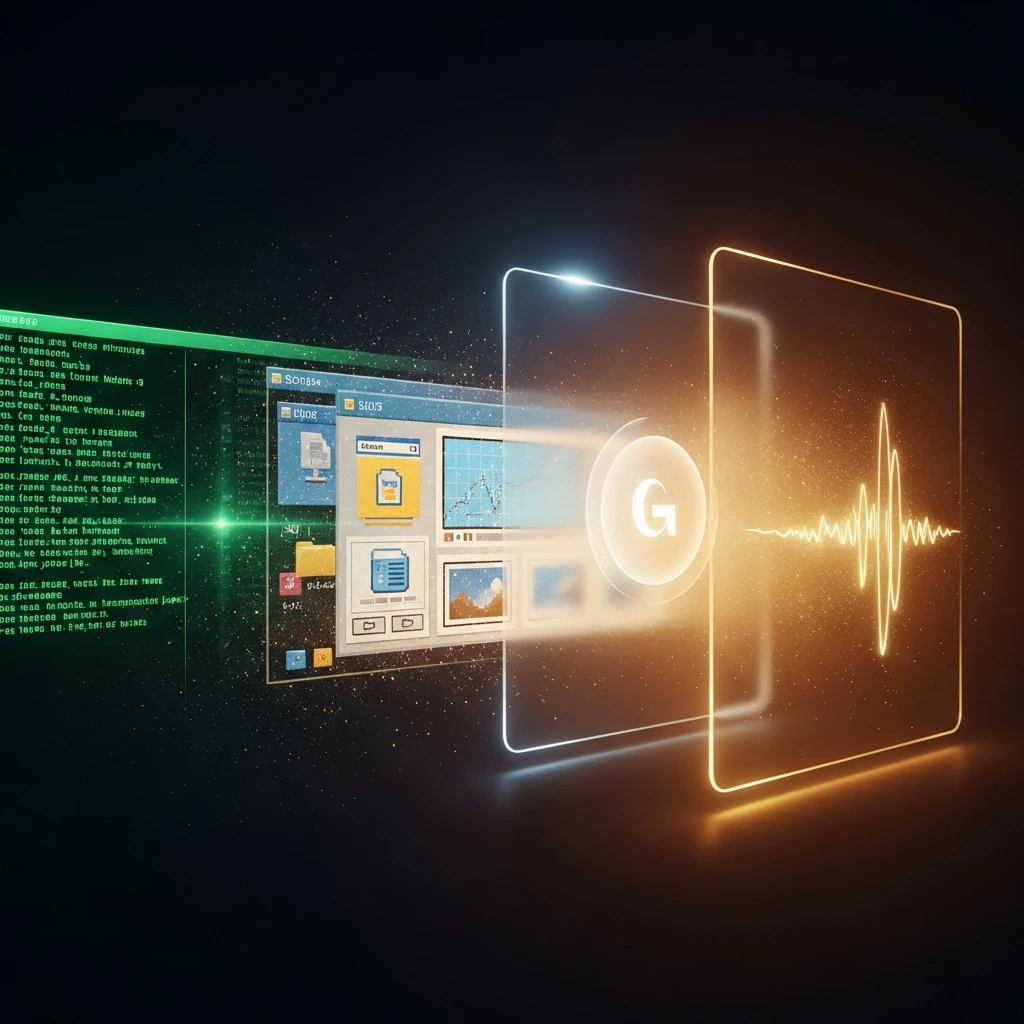
Each era collapsed one more layer between intent and action.
CLI gave us precision at the cost of fluency. GUIs gave us fluency at the cost of depth. Touch gave us immediacy at the cost of expressiveness. Natural language gives us all three. For the first time, the interface asks for nothing in return. You don't learn its dialect. It learns yours.
1970s
Command Line
Type the exact syntax the machine expects.
1984
Graphical UI
Point and click. Abstraction through visual metaphor.
2007
Touch
The interface disappears. Direct manipulation.
Natural Language
State what you want. The machine figures out the rest.
1970s
Command Line
Type the exact syntax the machine expects.
1984
Graphical UI
Point and click. Abstraction through visual metaphor.
2007
Touch
The interface disappears. Direct manipulation.
Natural Language
State what you want. The machine figures out the rest.
Software was installed per task. Agents are general-purpose infrastructure.
One intent. Every capability. Instead of fifty apps, one intelligent layer that reads your goals and routes to whatever is needed to accomplish them. The app store model was always a workaround for the absence of something better.

The .exe era
Every task demands its own application. You open Word to draft, Chrome to research, Photoshop to edit, Slack to coordinate, Excel to analyze, Calendar to schedule. You become the integration layer — switching context, copying data between tools, learning six interfaces to accomplish one outcome. The software does what it's told, step by step, no further.
The agent era
You state what you want to happen. The agent drafts the proposal, pulls the supporting data, formats the deck, schedules the review, and sends the summary — in one conversation. You stop operating tools and start defining outcomes. The interface doesn't disappear; it finally makes sense.
When reasoning costs near zero, software becomes a utility.
Electricity didn't just make factories faster — it restructured what a factory was. Intelligence as infrastructure does the same thing to knowledge work. The question isn't whether AI will be embedded in every workflow. It's whether the people building those workflows understand what they're actually doing.
10x
cost reduction per year, last 5 years
40%
of enterprise apps will feature AI agents by 2026
$52.6B
projected AI agent market by 2030
1,445%
surge in multi-agent system inquiries, 2024-2025
The problems worth solving are the ones that exceed human cognitive limits.
AlphaFold predicted the structure of 200 million proteins — a task that would have taken structural biologists millennia. That's not acceleration. That's a category shift in what science can ask.
Human institutions fail at coordination not because people are bad at it, but because information doesn't move fast enough. Agents can hold context across thousands of actors simultaneously.
A doctor, lawyer, and engineer walk into a conversation — and you talk to all three at once. The scarcest resources in the world are expertise and attention. AI makes both abundant.
I don't build AI. I build the architecture that makes AI accountable.
Agents run on someone's design — and that design determines whether a system earns the right to act on your behalf, or just acts. My work is the structural layer: observable steps, human checkpoints where stakes are high, retrieval grounded in your sources rather than the open web. Not the loudest systems. The ones that sleep well at night.